The need for really clean air
Dr. Albert Kinga : The need for really clean air - how do air pollution and climate change affect the development and course of respiratory allergic diseases?
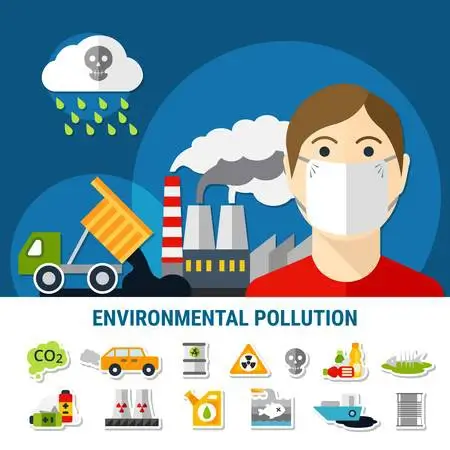
Air pollution and climate change significantly affect human health and everyday well-being and contribute to the development or worsening of chronic respiratory diseases, in our case, allergic rhinitis and asthma. In "westernizing" countries, it can be clearly observed that people spend more and more time inside their houses, which are insulated with increasingly perfect technology. The fact that we spend most of our time inside the walls of the house means that we are much more exposed to indoor allergens (dust mites, pets, molds), and the health of our respiratory system is affected by tobacco smoke and other indoor pollutants. Outdoor air pollution resulting from road traffic and other human activities, to which we are unwittingly exposed every day, contributes to these negative effects. There is a lot of talk about the direct connection between air pollution and global warming, but less is said about the direct or indirect effect of the emitted harmful substances on our health. These factors can directly damage the mucous membrane of our respiratory organs (nose, trachea, lungs) or indirectly cause problems by increasing the allergic power of certain plants or molds. Thanks to global warming, the living space of some plants is changing, they are also appearing in places where they were not native until now, and more extreme weather conditions can aggravate the symptoms of people suffering from already developed, existing respiratory allergy diseases.
With the help of this summary, I would like to present the relationship between indoor and outdoor air pollution, global warming and the development and worsening of the most common respiratory diseases, such as asthma and allergic hay fever, as well as suggestions for mitigating the harmful effects. The importance and topicality of the summary is supported by the fact that the major European organizations dealing with respiratory diseases (European Respiratory Society (ERS) Early Career Members Committee (ERS ECMC) and the European Academy of Allergy and Clinical Immunology (EAACI) Junior Members Assembly (EAACI JMA) Environmental awareness initiative (Environmental Awareness Initiative) formulated by professionals within its framework.
How it started?
Since the beginning of the industrial revolution, explosive urbanization has started in Western countries, which has significantly affected our environmental exposure. Following the trends, several middle-income developing countries are currently undergoing the above-mentioned processes. A direct consequence of these facts is that nearly 90% of the world's population lives in places where, according to the WHO (World Health Organization), the air quality is inadequate. It is important to note that air pollution is currently one of the leading causes of premature death in the world.
Allergic rhinitis (hay fever) and it is asthma actually, the diseases of our respiratory organs can exist independently of each other, but it is much more common that allergic asthma develops on the basis of allergic hay fever. The ever-increasing incidence of these diseases reflects the price that the westernized lifestyle brings, practically we pay for (urban) comfort with our health. The first filter of air pollution and environmental damage is our nose, followed by the respiratory tract. The job of the mentioned organs is to stop and remove harmful substances entering their bodies, but since they are exposed to pollution for a long time, on a daily basis, in large quantities, in the long term, the protective mucus membranes that cover them become overloaded and unable to fully perform their filtering tasks, diseases appear and then worsen. In the case of individuals who have a hereditary tendency to develop respiratory diseases (asthma, allergies in immediate family members) or are exposed to large amounts of harmful environmental factors on a daily basis (workplace, big city), the process may be more pronounced. Political measures and regulations play an important role in curbing the development and effects of diseases caused by air pollution, for example the effects of smoking bans, which have already proven to be effective, can be felt.
Indoor pollution
The fact that people in developed countries spend 80% of their time indoors highlights the importance of indoor air quality. The main factors influencing its composition are external environmental factors, the quantity and quality of internal ventilation and the activities taking place inside the house (cooking, smoking, heating methods).
Passive smoking (second hand tobacco smoke) – our airways are home to harmless bacteria, viruses and fungi, which are in balance with each other, just like the gastrointestinal tract. As a result of passive smoking, their balance is disturbed and results in malfunction. This can result in more frequent asthma occurrences or more difficult-to-treat asthma attacks in children or adults. In the same way, gas released during heating and cooking indoors can have a damaging effect on the respiratory tract NO2, CO other volatile substances(cleaning agents, air fresheners, cosmetics).
Indoor allergens (dust mites, molds, cockroach allergens, animal allergens) also affect indoor air quality. Dust mite allergy is the most common, it affects more than 50% of asthma sufferers, unfortunately it is diagnosed in few patients and treated in even fewer patients. In the case of children, according to statistical data, existing dust mite allergy increases and makes wheezing episodes more frequent. Allergies caused by animal epithelial cells affecting 15% of the population are also important factors in indoor air quality. Moisture in apartments can also cause problems - it is present in 10-15% of households and gives room for the reproduction of molds, cockroaches and dust mites, along with their allergic consequences. It is good to know that indoor allergens are responsible for the development of much more serious respiratory allergic diseases compared to outdoor pollens.
The same phenomenon is observed schools, kindergartens case, the European Parliament examined the air of these indoor units in 23 countries and found the presence of allergens (mainly mold, dust mites) to be above the limit in several cases, the concentration of CO2 and formaldehyde from heating can greatly contribute to the development of chronic respiratory problems in children. The study also highlighted that the indoor air quality of educational institutions along busy roads is worse compared to those located in less polluted places.
Outdoor dirt
Air pollution has a long-term negative effect on our respiratory organs. In terms of their sources, air pollution caused by transport and industry is the leading cause of asthma problems in school-age children, and results in worsening of asthma in adults. A series of studies prove that the diesel particles in the exhaust gas modify the pollen in the air, make it more aggressive, and stimulate the plant to produce more pollen, so we can say that environmental pollution directly and indirectly has a negative impact on the development of allergic hay fever and its aggravation. The pollen molecule attacked by the exhaust gas causes a more aggressive effect in our nose, lungs, and bronchi. Organic dusts, toxins, microorganisms, released methane gases and ammonia entering the air during animal husbandry also have a negative effect on already developed respiratory problems.
Global warming, climate change
The consequences of the continuous warming of our earth are more extreme weather conditions and heat waves. Due to the warmer average temperatures, their flowering periods are postponed more, the plants produce pollen for a longer period and in larger quantities. Plants appear in places where they were not typical before, e.g. In the past, the Székelyföld region did not prove to be a favorable habitat for ragweed, but as a result of the increasingly hot summers, it has started to multiply there as well. As a result, new allergic sensitivities appear, and the number of people suffering from allergic hay fever increases.
Heat waves are followed by unexpected rains and storms, which stir up the pollen and cause asthmatic crises in allergy sufferers. Asthma attacks that appear out of nowhere during storms are known as thunderstorm asthma. Dampness caused by moisture and floods can result in the growth of molds.
As a summary, I would like to emphasize that climate change and environmental pollution have a bad, negative effect on the health of both children and adults, and have been proven to contribute to the development of respiratory diseases or their aggravation. These effects could be mitigated or prevented if appropriate measures were taken. The passage of time is not grist to our mill.
What can we do?
In addition to the possible elimination of environmental factors (reduction of passive or active smoking, adequate ventilation, eradication of mold foci, dust mite prevention, etc.), it is recommended to treat already existing allergic hay fever or asthma by a specialist.
Important:
- do not neglect the periodic control of your allergic hay fever or asthma!
- we don't just take our medicines until we feel very sick, but as long as our doctor has recommended!
- ask a professional for help, don't treat yourself!
I. Eguiluz-Gracia et al.”The need for clean air: the way air pollution and climate change affect allergic rhinitis" Allergy, 20202 translated and supplemented by Dr. Albert Kinga, allergist, Albert Optimun Medicals, Sepsiszentgyörgy, www.optimun.ro
Hay fever can be cured with specific immunotherapy led by an allergist!
How is allergic hay fever and asthma correctly and modernly investigated?
Allergy detection to identify the cause of the symptoms. This can happen with skin testing (prick test), the result is fast and painless, provided that the patient does not take anti-allergy treatment before.
If the skin test is not feasible, from blood, allergic antibodies through its detection, we identify the root cause of allergic hay fever.
Examination of respiratory organs - since allergic hay fever is a risk factor for the development of asthma and is an allergic inflammatory disease of the mucous membranes, if there are respiratory complaints, the patients are also examined in this direction:
- fire roads degree of inflammation investigation – FeNO - measurement of NO exhaled from the airways: it is simple, painless and gives results within minutes. An elevated value of exhaled NO indicates airway inflammation, an indirect marker of the most common chronic airway inflammation, asthma.
- Spirometric test, respiratory function test, which is the airways about the narrowing and provides information on its medicinal reparability.
A full examination is recommended, because in this way we can effectively deal with allergic hay fever and its consequences and choose an optimized treatment suitable for the patient.
Dr. Albert Kinga allergist, Albert Optimun Medicals, Sepsiszentgyörgy, www.optimun.ro