Mumu of cold times
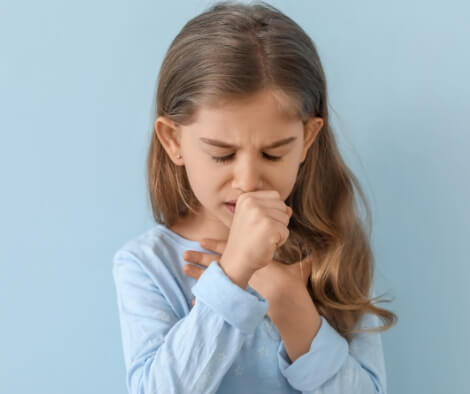
The cold-weather bogeyman: when my child coughs. Causes and possible consequences of recurrent wheezing. Will my child develop asthma?
Asthma is now one of the most common chronic childhood diseases. According to a UK survey, this condition, which can cause breathing difficulties, prolonged coughing and wheezing, affects one in eleven children. Accurate diagnosis and treatment are particularly difficult below the age of six: young children cannot reliably perform lung function tests, so the specialist must rely on the symptoms and medical history reported by parents, together with a physical examination. Above six, children are more likely to be able to perform the breathing tests. These help the specialist obtain a clearer picture of the disease, monitor treatment effectiveness and assess the child's condition.
THE most conditions involving coughing can also cause cold-like symptoms , but not every child with a runny nose and cough actually has a cold. Many of these children have allergies, but without appropriate assessment, parents may simply wait for the problem to resolve, week after week. At consultations, we still often hear that since starting nursery or kindergarten, a child attends for one week and is ill for two, and that this is considered normal. Many of these children probably have respiratory allergic sensitisation, which maintains inflammation in their airways. A common viral infection acquired in the community may then cause these strained or hyperreactive airways to narrow, producing wheezing. Imagine inflating a balloon: air can enter, but when its opening is pinched, it can escape only through a narrow channel. This condition needs treatment and rarely improves on its own in the long term. Recurrent wheezing can precede asthmaand may develop into asthma without appropriate treatment. It is particularly important to establish whether a child with recurrent wheezing has an allergy. This is assessed through different allergy tests and a consultation with an allergist. If an allergy is confirmed, allergen-specific immunotherapy can treat it and thereby reduce the risk of developing asthma. In established asthma, control may improve substantially, potentially reducing medication needs over time. Even in children without allergies, recurrent wheezing requires appropriate treatment and monitoring. Rather than simply waiting for the child to outgrow the problem, specialist care can help prevent worsening symptoms and persistent asthma.
What does an allergy assessment involve?
Allergy detection to identify what triggers the symptoms. This can be done using with skin testing (prick test). Results are obtained quickly and the test is painless, provided the patient has stopped anti-allergy medication for the required number of days beforehand. It is a common misconception that testing is possible only above a certain age. A skin test can be performed at any age if the child cooperates sufficiently to allow the procedure. It requires an appropriately experienced specialist.
If a skin test genuinely cannot be performed, from blood, allergic antibodies can help identify the trigger for wheezing or allergic asthma. Patients should not choose a laboratory panel themselves: the specialist should select the tests and interpret the results.
Examination of respiratory organs - Because recurrent wheezing is a risk factor for asthma, an inflammatory allergic disease of the airway lining, assessment for asthma is also important. These tests can generally be performed above the age of six. Depending on the child's abilities, we recommend two types of test:
- Airways degree of inflammation investigation– FeNO - measurement of NO exhaled from the airways: it is simple, painless and gives results within minutes. An elevated value of exhaled NO indicates airway inflammation, an indirect marker of the most common chronic airway inflammation, asthma.
- Spirometry: a lung function test, which is the airways about the narrowing and provides information on its medicinal reparability.
A comprehensive assessment is recommended so that recurrent wheezing and its consequences can be properly addressed and treatment tailored to the patient.
Recurrent wheezing and childhood asthma: information for parents
What is wheezing?
THE wheezing is a high-pitched whistling sound heard when a child breathes, particularly during exhalation. It occurs when airways become narrowed or inflamed for various reasons, making it harder for air to pass through them.
What is recurrent wheezing?
Recurrent wheezing means that a child has repeated episodes of wheezing, generally:
- At least three times a year, and
- Several weeks apart from one another.
It is not a disease in itself, but a symptomthat may indicate various conditions.
What can cause recurrent wheezing?
1. Viral infections
- The most common cause in children aged one to five.
- Associated with a runny nose, fever and cough.
- The child may seem symptom-free after the infection has passed.
2. Asthma and an allergic background in atopic children
- When wheezing is triggered by more than infections alone.
- Symptoms may occur with:
- exercise, such as running,
- cold air,
- allergens, such as pollen or dust mites.
- Irritants, such as tobacco smoke or fog
- Night-time coughing and chest tightness may also occur.
- Allergies, asthma or eczema are common in the family.
- The child may also have several allergic conditions together, including eczema or atopic dermatitis, food allergy, hay fever or nasal polyps. These can increase the frequency of wheezing.
3. Reflux (GERD)
- Stomach acid can flow back into the oesophagus and irritate the airways.
- This is more common in infants.
Types of wheezing
- Episodic viral wheezing (caused by a viral infection, with no confirmed allergic background, infrequent episodes and complete absence of symptoms between episodes)
- Multiple-trigger wheezing (several triggers: the child wheezes during viral infections and also has symptoms between infections, such as a persistent cough, most often triggered by cold air, allergy, physical exertion such as running or laughing, irritants or tobacco smoke)
There are intermediate forms. A child with viral wheezing who becomes sensitised to pollen, dust mites, mould or animal dander should be classified as having the more complex, multiple-trigger form, which carries a higher risk of asthma.
When should we see a doctor?
See a doctorif:
- The child frequently wheezes.
- The child regularly coughs at night.
- Physical exertion causes breathlessness.
- Breathing is rapid or difficult, or the chest draws inward with breathing.
- The child's lips or nails look bluish.
- Symptoms do not improve with the previous treatment.
See a an allergistif your child, regardless of age:
- Has or has had recurrent wheezing episodes
- Seems to have a cold all the time
- Has prolonged sniffing, a runny nose or persistent nasal congestion
- Regularly coughs at night
- Has a prolonged cough after colds
- Frequently has summer colds, even outside periods of viral illness.
Summary for parents:
- Recurrent wheezing is common, especially in young children.
- Most cases are benign, but require attention and treatment.
- The suspected asthma must be taken seriously, because it can be well controlled with appropriate treatment.
- Not every child with wheezing develops asthma, but almost all asthma starts with episodes of wheezing.
- A thorough and accurate assessment includes allergy screening and lung function tests, with careful interpretation of their results.
- The allergic component can be treated with desensitisation (allergen-specific immunotherapy), which can help prevent the development of asthma.
- Respiratory allergies should not simply be expected to disappear with age.
- THE appropriate treatment helps a child live a full life.
Dr. Albert Kinga
Consultant in allergology and clinical immunology, Sfântu Gheorghe
Albert Optimun Medicals