Allergological testing
Many people think they have discovered an allergic cause in the background of their recurring, medically undiagnosed complaints, others want to avoid a later complication caused by allergies, but few are aware of exactly what they are testing for and under what conditions or the allergist recommends testing.
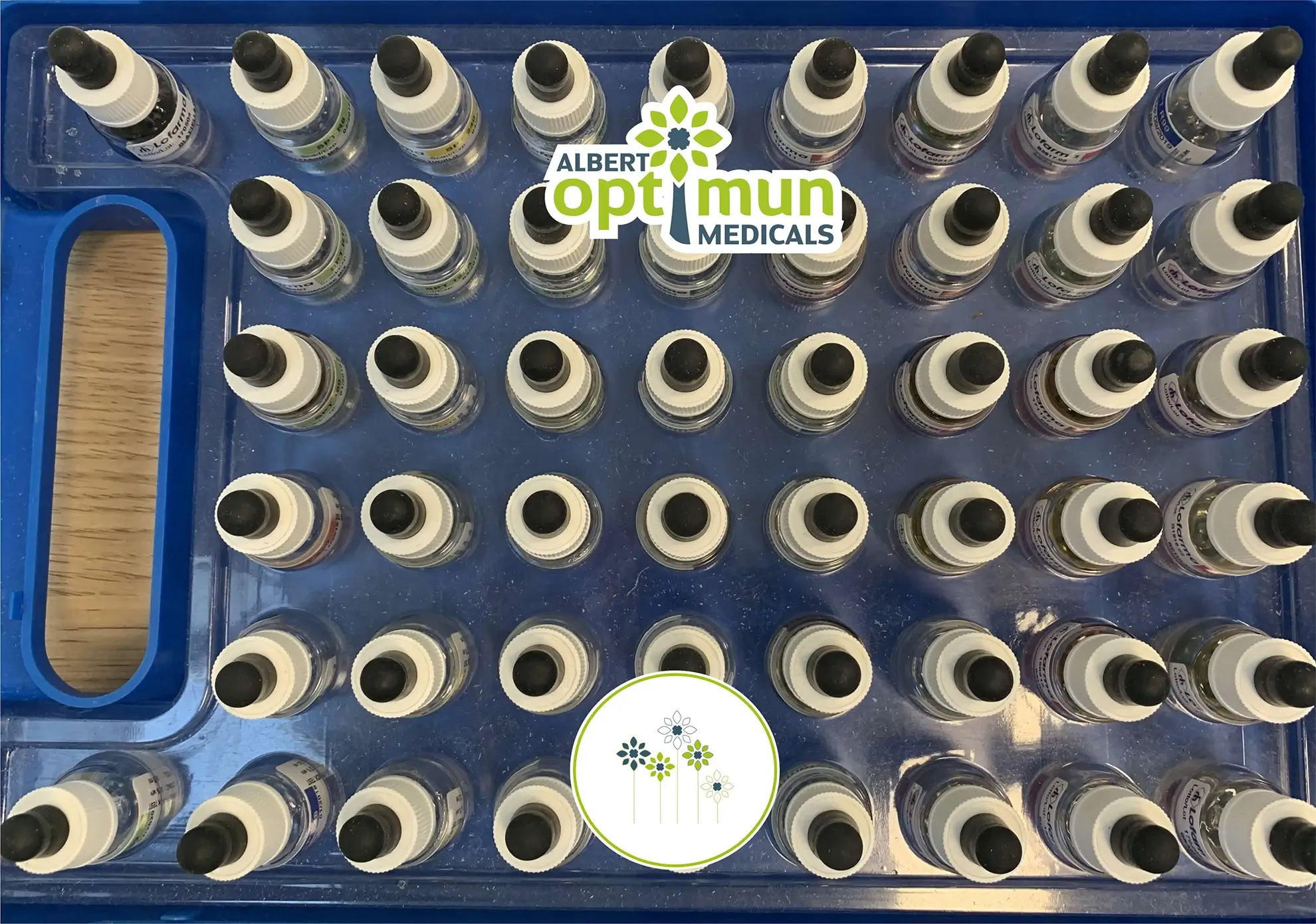
Good day, I'm here for an allergy test!
It is perhaps the most frequently uttered phrase from the patients' mouths during my specialisations. Recommended by a family doctor, a neighbor, a pharmacist, or just driven by curiosity, more and more people want to know if they are allergic to something, should they - or are they afraid of a more serious consequence caused by some sensitivity? Many people believe that they have discovered an allergic cause in the background of their recurring, so far undiagnosed complaints, others want to avoid a later complication caused by allergies, but few are aware of exactly what and under what conditions the allergist tests or recommends testing.
How does a professional consultation take place?
Although some patients "for the test" comes, it quickly turns out that there is no general, all-encompassing allergy test. During a thorough and detailed consultation and examination, we discuss the patient's complaints and, depending on them, the allergist recommends testing options, tailored to the specific case. For this, it is very important to know and discuss the exact medical history (when the symptoms appeared, what drugs were used to treat them, what the changes looked like, what drugs the patient is currently taking, what co-morbidities are present, etc.). Since there are no all-encompassing, general solutions, it helps a lot if the patient brings his previous medical findings related to his complaint, if he had a problem visible to the naked eye, he makes photographic documentation of it, etc.
What does allergy testing mean?
After the exact cause and circumstances of the symptoms have been discussed, to what extent they are justified, the allergist's specialist will recommend testing, corresponding to the suspected sensitivity. These can be skin tests or a series of blood analyses.
Skin prick test - It can be performed at any age, and is one of the most appropriate tests to find out the cause of a suspected allergy. It is usually performed on the skin of the forearm, with the help of a device called a lancet and an allergen drop, and provides a painless, quick and accurate diagnosis. Airborne allergens (dust mite, mold, various pollens, animal epithelium) or food allergens are the most frequently used substances, targeted, depending on the symptoms. It is essential for an accurate diagnosis of allergic hay fever or asthma, an "allergic" diagnosis should never be accepted if allergic sensitization has not been proven. It is possible to test a patient who is not under steroid or antihistamine treatment (the recommended interruption is at least 4 days for 2nd generation products, 10 days for 1st generation, "old" products), and it is good to know that there are no drop tests for preservatives, flavor enhancers, or additives.
Patch skin test- painless, simple application test, which is used to detect contact-type sensitivity. It primarily aids in the diagnosis of the following pathologies: contact dermatitis, eczema, dyshidrosis, perioral dermatitis, contact urticaria, atopic dermatitis, and it is recommended to test for dental allergens before placing braces. The most common contact allergens are various metals, fragrances of cosmetics, preservatives, medicines, plastic components, etc. In practice, this is done by using allergens dissolved in factory, controlled concentration and non-irritating carriers. The given materials are glued to the skin of the patient's arm or back in a closed bandage for 48 hours, and the result is read after 72 hours (3 days) after the application. The patch skin test is a modern diagnostic tool available today, the implementation and evaluation of which is governed by international standards.
Allergy panelfrom blood – serves to detect the allergens causing the symptoms in the blood, requires a venous blood sample, can be performed in both children and adults. Most frequently used panel a a series of airborne allergens (IgE specific panel respirator, panel aeroallergen), food allergen test kit (IgE specific panel alimentary) or a combination of the two previous ones, a mixed panel (Ige particular panel mixt) and the modern, complex panels at the molecular level (Alex, Isac, Faber), whose evaluation is much more complex and the results are much more accurate than those of the previously mentioned panels. In terms of their diagnostic value, the simple panels are completely equivalent to the results of the skin prick test, in fact we get a quantitative, numerical result, which may vary slightly depending on the technique used by the given laboratory. We recommend performing it in patients where prick skin testing encounters obstacles (fear of testing, extensive active skin problems, co-morbidities or prior consumption of drugs that prevent testing).
The activity of the allergist specialist does not end with the tests, after their completion, respiratory function tests for the purpose of investigating and monitoring asthma (spirometry, exhaled NO, etc.)
What are the symptoms for which specialist consultation and testing are absolutely recommended?
Treated or untreated asthma, hay fever symptoms, cough, recurrent wheezing (recurrent wheezing) in children, recurrent nasal polyp, itchy eyes, recurring unspecified origin headaches, sinus inflammations, different skin symptoms – hives, eczemas, atopic dermatitis, strange swellings, bee or wasp sting in case of subsequent allergic reactions in infants diarrhea, reflux complaints, feeding difficulties, digestive complaints in case of
Down with the silly beliefs, stop spreading COMPLETELY WRONG INFORMATION!
- Allergy testing cannot or should not be done under the age of 3, because "allergy does not come out" – if the allergic disease is of such a nature, the test can be carried out at any age, if it was carried out correctly, the result is authoritative
- It is not worth testing in case of atopic dermatitis - atopic eczema is a common skin problem in young children, in almost half of the cases its appearance is linked to food or environmental allergens, during testing we can shed light on the real cause and thus apply targeted and correct treatment.
- It is only worth doing a test when the symptom is visible (e.g. when eczema or hives appear, when there are hay fever symptoms) - in the case of a real allergy, the antibodies can be detected from the blood or the reaction from the skin at any time, not only when the change is visible to the eye. What's more, in many cases we cannot examine a patient with hives or eczema with skin tests because they are under medication or there simply isn't enough free space on the skin of the forearm to perform the tests.
- I came for drug allergy testing - there is no general drug allergy testing, testing for drug-related symptoms often requires a hospital referral.
- I came for preservative testing - for the time being, there are no certified tests for testing additives, dyes, artificial dyes, flavor enhancers present in food (hot dogs, ketchup, chips, cola, candies, etc.) or in environmental factors (cleaning agents, washing powder), although they cause problems in many cases.
- I came for an intolerance test - among the services of the laboratories, there are quite a few intolerance tests to choose from, which are used to detect IgG type antibodies. Despite their high price, they enjoy great popularity, it is a pity that their results cannot be used from an allergological point of view. The European Association of Allergology (EAACI) stated in an official statement that the results of these tests cannot be evaluated, they are practically a scam.
- I've been preparing for an allergy test for a long time, but I couldn't figure out what I'm allergic to - the patient doesn't even have to realize it, with the help of a thorough specialist consultation, appropriate examination and tests tailored to the case, the specialist discovers the root cause and treats the problem.
Feel free to contact your allergist!
Albert Optimun Medicals - focus on health!
www.optimun.ro
Ageappointment at 077112255