Let's talk about childhood food allergies
Dr. Albert Kinga allergist, Albert Optimun Medicals, Sepsiszentgyörgy, www.optimun.ro
According to literature data, food allergies affect 8-10% of the population (real, confirmed food allergies can be put at 2-4% for adults, two to three times this number for children).
The protein component of food is responsible for food allergies, symptoms affecting different organs (skin, gastrointestinal system, respiratory system) can occur due to an allergic process in the body, and we often do not even suspect that a food allergy can be hidden behind a symptom.
Contact with the proteins of food allergens and becoming sensitive often occurs in early life, the food proteins can be transferred to the baby's body during the 9 months spent in the womb, after that with breast milk and then with the introduction of solid foods. So, from an immunological point of view, supplementation actually begins in intrauterine life.
The symptoms caused by foods can show a great variety, and their determination is difficult due to the many confounding circumstances. In general, it can be said that most food allergies begin in early childhood, for example, almost all cow's milk allergies develop by the age of 12 months (however, not all of them can be recognized at this age!!!), the majority of egg allergies by the age of 18 months.
A connection has been established between food allergy, atopic dermatitis and asthma, but not all atopic dermatitis or asthma is caused by a food allergy!
WHEN SHOULD WE SEE A SPECIALIST?
If our child experiences one of the following symptoms:
- red, wet, itchy or dry, peeling - with atopic dermatitis - spots, small rashes
- regurgitation, reflux baby
- cramps, abdominal pain, slimy, frequent loose stools, stools containing undigested pieces, bloody stools
- mouth, face swelling
- recurrent hives
- recurring cough, otitis media, wheezing, wheezing
THE 8 MOST IMPORTANT FOOD ALLERGENS AFFECTING CHILDREN
- cow's milk
- egg
- soybean
- wheat
- fish
- peanut
- oil seeds (treenuts)
- crustaceans, shells (shellfish)
Let's see some important information about them
COW'S MILK
An allergy caused by cow's milk protein does NOT mean LACTOSE INTOLERANCE (a condition caused by the lack of a decomposing enzyme caused by milk sugar). It is the first true allergen of newborns, infants and small children, as it filters through breast milk and skimmed milk, normal formulas are made from cow's milk.
The symptoms of sensitivity range widely, skin symptoms appearing on the cheeks or all over the body (red, wet, itchy or dry, peeling - with atopic dermatitis - spots, small rashes), frequent vomiting, abdominal pain, slimy, frequent, loose stools, swelling, hives, recurrent cough in older children, otitis media, wheezing - wheezing, whistling a milk allergy can also hide behind it.
For children diagnosed with such an allergy, a DIET without complete milk protein is recommended. In the case of breastfeeding mothers, it is recommended that the mother exclude milk protein and beef from her diet. For formula-fed babies, the milk powder to be chosen is special, in which 95% of the milk proteins have been processed (formula extensive hydrolyzate), and for those babies who cannot tolerate it, we recommend giving a formula made of amino acids, completely free of milk proteins.
For children under 1 year of age who are sensitive to milk protein, it is WRONG to use hypoallergenic formula or soy-based formulas.
Milk protein sensitivity can be outgrown with a strictly observed diet.
EGG
Egg white is a highly allergenic food, but at the same time, egg yolk can also cause allergies. In case of a proven allergy, the disease can be cured with an egg-free diet.
SOY
It is a very common food additive, and is often used to increase the nutritional value due to its high protein content (hot dogs, cold meats, chocolate, etc.).
WHEAT, FLOUR
It is important to separate FLOUR ALLERGY from GLUTEN SENSITIVITY.
GLUTEN SENSITIVITY is an autoimmune, non-allergic disease diagnosed by an allergist or gastroenterologist. Its essence is the pathological immune reaction induced in the intestinal wall by the gluten of cereal proteins. After the start of complementary feeding, the child grows less, lags behind in physical development compared to his peers, may remain thin and short, and puberty may be delayed. Frequent, heavier stools with a good appetite are characteristic. Repetitive, difficult-to-treat diarrhea and vomiting are also typical. Children's bellies may protrude in addition to a thin, fragile body. Due to damage to the intestinal villi, the absorption of nutrients, vitamins and minerals deteriorates. Symptoms of iron deficiency may appear: paleness, fatigue, increased need for sleep. Symptoms of vitamin D deficiency in severe cases: larger, non-closable cavity, tooth development disorder, enamel defects on the teeth. Dry skin, eczema-like rashes are common around the mouth, anus, and on the extensor side of the limbs. Attention deficit hyperactivity disorder can be a nervous system symptom in children. Latent, asymptomatic conditions are also characteristic: the child may just be thinner or often have loose stools without other symptoms.
IT CAN ONLY BE DETERMINED FROM BLOOD AND IS NOT SUITABLE FOR DIAGNOSING WITH BIORESONANCE OR OTHER INSTRUMENTS!
WHEAT, FLOUR ALLERGY
After consumption, it is accompanied by classic allergic symptoms such as hives, vomiting, swelling of the mouth or face, etc.
PEANUTS, OIL SEEDS, FISH AND SHELLFISH
Unfortunately, they rarely go away, in fact, the situation can worsen from adolescence, those who are sensitive to them should avoid their consumption for life. Serious research is underway to cure them, with encouraging partial results.
PEANUTS are one of our strongest allergenic foods, there have been many studies regarding the optimal time of introduction, if there is an allergic disease in the family, we recommend introducing them above the age of 3.
INVESTIGATION
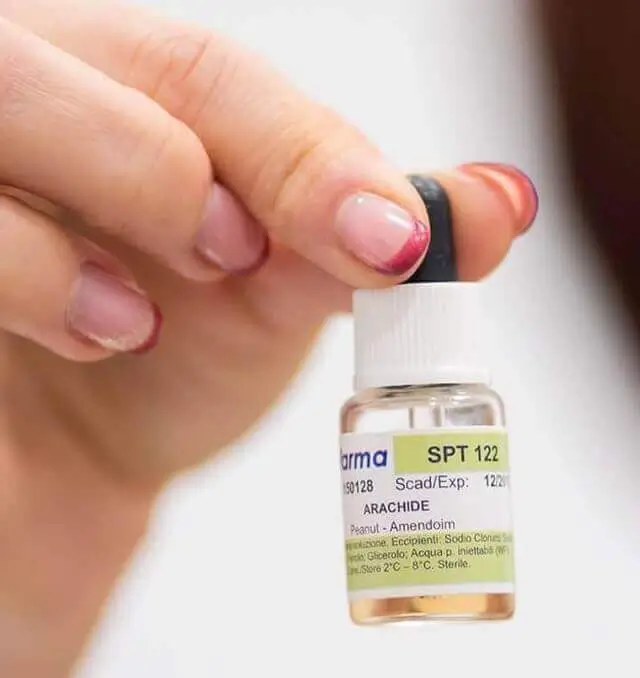
The diagnosis is often clinical, that is, it is based on the facts told by the parents. This is complemented by laboratory tests and allergy tests performed on the forearm or blood, depending on the child's age.
Dr. Albert Kinga allergist, Albert Optimun Medicals, Sepsiszentgyörgy, www.optimun.ro