Dust mite allergy - facts, misconceptions, possibilities, impossibilities
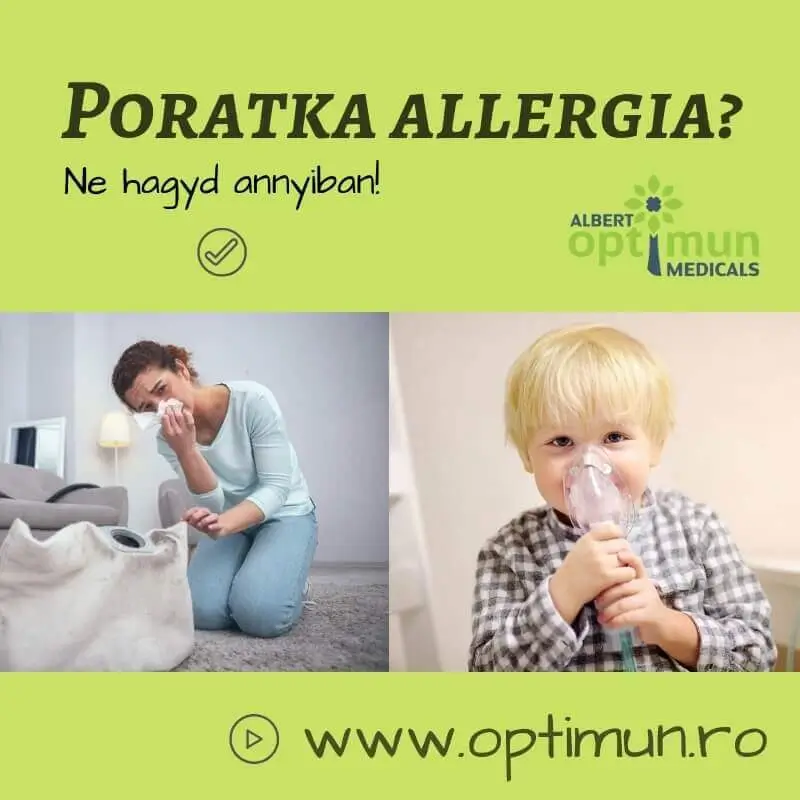
Dr. Albert Kinga allergist, Albert Optimun Medicals, Sepsiszentgyörgy, www.optimun.ro
What is a dust mite?
Microscopic, i.e. invisible to the naked eye, tiny organisms. The allergic reaction, which is mistakenly called a dust or feather allergy in common parlance, is actually caused by a 0.3 mm long, arthropod, the dust mite, and the typical symptoms are caused by its airborne, dried excrement. The largest number of them roost in our beds, and we often help their reproduction by overheating and overhumidifying the apartments. They practically live with us, feeding on our fallen skin cells and hair. They are most common in spring, late summer and early autumn, when the heating season starts or ends and the humidity in the apartment changes. This type of mite can contaminate flour and malt flour in the pantry, and eating food made from these can also cause symptoms.
Many people believe that if they clean enough or change the feather bedding, their dust mite allergy will disappear, unfortunately this is a misconception, reducing dust mite concentration is indeed an important step, but it is by no means sufficient and by no means the only thing we can do for our health. http://www.optimun.ro/blog/45/ )
Symptoms they are responsible for
Dust mite allergy can affect both adults and children. The symptoms can be divided into two large groups depending on where they cause the complaint (skin or respiratory), but it is not uncommon for a patient to be bothered by symptoms classified into both groups.
Respiratory symptoms
Dust mite excrement, which multiplies easily in the moist, humid air of apartments, flies in the air, so we inhale it most often. Mainly in our nose for hay fever-like symptoms responsible (runny nose, nasal congestion, sneezing, nasal itching) but it is not uncommon to eye symptoms also be associated, such as tearing, itchy eyes, under-eye circles and swelling, bags. Nasal polyp may be caused by dust mite sensitization, multiple surgical removal of polyps is often unnecessary, because the nasal polyp is only a symptom, the root cause is the allergy itself.http://www.optimun.ro/blog/49/ ) In fact, if we treat it, the problem will disappear.
The dust mite, once it has taken its toll on our nose, will unfortunately migrate and asthmatic symptoms may appear. Over time, the initial coughing and throat clearing can turn into a forced cough, and then the typically (but not exclusively) nocturnal suffocation attacks appear. In the case of a child or adult with proven asthma or a dust mite allergy, the allergy becomes significantly easier to treat, the attacks become less frequent and the condition stabilizes. It is a proven fact that dust mite sensitization present at an early age predisposes to the development of asthma. Children recurrent gasping, recurrent wheezing there is often a dust mite allergy behind it. It is a misconception that a child with a dust mite allergy will recover from the allergic and asthmatic tendency in the absence of special treatment.
Skin symptoms
Since the number of dust mites in the bed is the highest, they typically appear in the morning hives in this case, we have to think about contact allergy caused by them. In rarer cases, it can also attack through the alimentary canal, eating food contaminated with dust mites can trigger hives. Eczema, atopic dermatitis the cause of its recurrence may be dust mites. (http://www.optimun.ro/blog/36/ )
Diagnostic options
The on the skin of the forearm you are done with testing from blood the presence of dust mite allergy can be confirmed by detection. There is a possibility multiplex test line to perform, with the help of which we can also determine which molecular component of the dust mite the patient is sensitive to, and what he can expect in the long term regarding his allergy.
Treatment options
Many people think that it is not worth dealing with a dust mite allergy, because it cannot cause any complications. Unfortunately, this is a misconception, the facts support that over time the symptoms increase, it promotes the development of new allergies and a seemingly innocent hay fever can develop into asthma. Asthma screening (pulmonary function tests) is recommended for patients with proven dust mite allergy.
We have two choices, but we often combine the two. With drug treatment we alleviate the symptoms, introduce substances into the body that prevent the appearance of allergic symptoms, reduce allergic inflammation of the eyes and nasal mucosa, and try to counteract the possibility of developing asthma. It is very important to know that drug treatment alleviates the symptoms, does not solve the real cause of the disease, but is an important step in restoring the comfort of the suffering party. Many people are averse to taking medication, even though modern preparations are available today, which are dosed according to the level of illness of the individual with hay fever.
The other option is allergen specific immunotherapy, with which we can recover from our allergies caused by dust mites. A targeted form of treatment, an excellent option, with the help of which we not only cover the symptoms of the allergy, but also achieve a real cure, its use is recommended for 3 - 5 years, under the supervision of an allergist. http://www.optimun.ro/blog/44/ )
I recommend all previously or newly untreated patients diagnosed with dust mite allergy to see an allergist for a health assessment and to inquire about new treatment options.
Dr. Albert Kinga allergist, Albert Optimun Medicals, Sepsiszentgyörgy, www.optimun.ro