A coalition for the health of those living on the margins of society
At the beginning of the week, the medical caravan started in Őrkő, yesterday it was stationed in the Csíki quarter, and then it also touches Szépmező, which was launched by the Caritas social sector and the Maltese Charity Service, Albert Optimun Medicals with its professional partnership in order to assess the health status of people living in deep poverty in the peripheral areas of the county seat.
Háromszék daily newspaper: Public life, January 28, 2022 - Katalin Demeter Virág
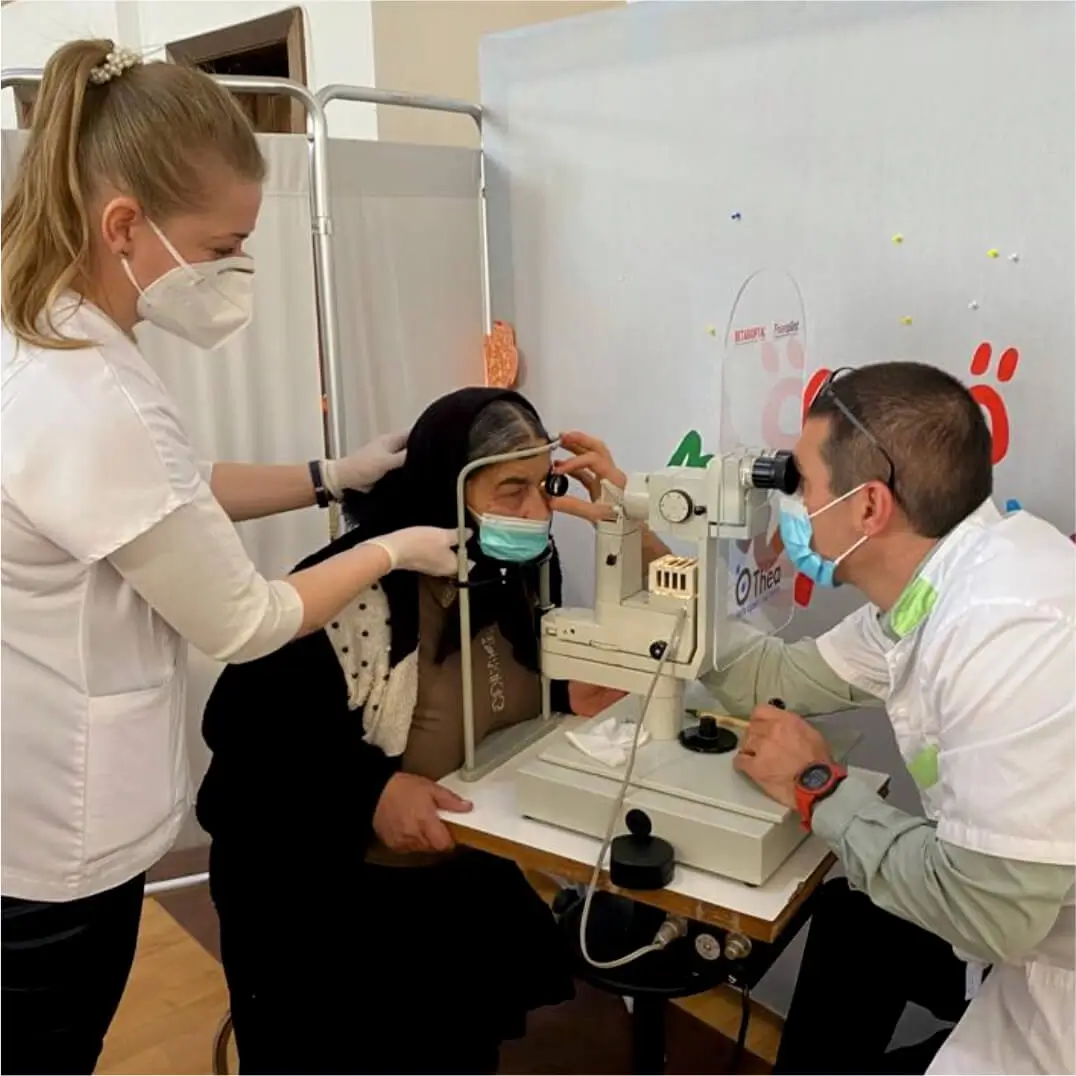
The medical caravan started in Őrkő at the beginning of the week, stopped in the Csíki neighborhood yesterday, and will also reach Szépmező. The health caravan started by the social sector of Caritas and the Maltese Charity Service with the professional partnership of Albert Optimun Medicals in order to assess the health status of people living in extreme poverty in the peripheral areas of the county seat.

Recorded by Albert Levente
A total of 600 people are examined at the mentioned locations during the health screening that is part of the Prospera Sepsis program. In addition to conducting a health assessment, the aim is to follow up the detected patients and those with health risks and, if necessary, to treat them.
Prior to yesterday's screening in the building of Ferenc Ferenc Gödri Primary School in Csíki, Attila Joós, project manager of Prospera Sepsi, András Loránd, project manager of the Maltese Charities and dr. András Albert, the professional manager of the Albert Optimun Medicals team, presented the details of the program at a press conference. As mentioned, the health campaign is part of an integrated project that has been taking place in Sepsiszentgyörgy for several months now, and through which six hundred beneficiaries are embraced and helped with educational, social and medical services.
András Loránd indicated that it is a comprehensive project that actively involves the affected community, behind which lies a broad partnership between the municipality and civil organizations; at the same time, it consolidates the work of the previous years and expands the range of services provided so far with a health component: through mediators, they try to monitor people's health and ensure that they receive health services and, if necessary, appropriate interventions.
Dr. Albert András explained that people living in the mentioned neighborhoods undergo an internal medicine-cardiology screening, but a limited laboratory examination is performed, children undergo an orthopedic screening, and the ophthalmology examination affects everyone. He pointed out that the people living in the three locations find it more difficult to access the health care system, either for financial or social reasons, they do not turn to health services, even when it is absolutely necessary, only at the last moment. And the worst thing is when the patient has to be treated in the emergency room, he thought. He explained that prevention is much more effective if those excluded from the social network become available, and he considers it essential that in the next phase of the program follow-up of detected patients also takes place. Then the health mediators will help the patients in the administration and in reaching the appropriate treatments.
The educational nature of the health program was also emphasized at the briefing: in addition to the screening of patients and their treatment, the affected social strata also get closer to health services, and this encourages them and those around them to go to a doctor and find solutions if they have a health problem. As Attila Joós pointed out, this is a social stratum that currently does not even have access to family medicine services. Thus, one of the objectives is to identify family doctors who will take on new patients from among the beneficiaries, he explained.
The specialists examined around 140 adults and children at Őrkő, and more than half a hundred people were waiting for the screening tests organized at the Csíki neighborhood school.